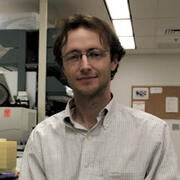
Morning Speaker
Elissa Hallem, Ph.D., Professor and Vice Chair
Department of Microbiology, Immunology, and Molecular Genetics
University of California, Los Angeles
"Skin-penetration behaviors of the human-infective worm Strongyloides stercoralis"
Dr. Elissa Hallem is Professor and Vice Chair for Graduate Studies in the Department of Microbiology, Immunology, and Molecular Genetics. She is also Director of the Immunity, Microbes, and Molecular Pathogenesis Home Area of the Molecular Biology Interdepartmental Ph.D. Program. Dr. Hallem’s lab studies skin-penetrating parasitic nematodes, which infect over 600 million people worldwide, primarily in low-resource settings with poor sanitation infrastructure. A major focus of the Hallem lab is on understanding how these parasites use host-associated sensory cues to find and invade human hosts, with the goal of developing novel strategies for preventing nematode infections. Dr. Hallem received a B.A. in Biology and Chemistry from Williams College in 1999, and a Ph.D. in Neuroscience from Yale University in 2005. After completing a postdoctoral fellowship at Caltech, she joined the UCLA faculty in 2011. Dr. Hallem received a MacArthur Fellowship in 2012. She is also the recipient of awards from the Burroughs-Wellcome Fund, the McKnight Foundation, the Searle Foundation, the Alfred P. Sloan Foundation, and the Rita Allen Foundation. She received the John H. Walsh Young Investigator Research Prize in 2015, a UCLA Life Sciences Excellence in Research Award in 2023, and a UCLA Postdoctoral Mentoring Award in 2026.
Visit Dr. Hallem's Faculty Profile
Visit Dr. Hallem's Lab
Dr. Hallem's Publications
Keynote Speaker
John P. Boyle, PhD., Professor
Department of Biological Sciences
Dietrich School of Arts and Sciences
University of Pittsburgh
"Nobody knows the trouble I've seen: Less than ideal model systems and how they help us understand life cycle evolution and host-parasite interactions"
The Boyle lab studies the human pathogen Toxoplasma gondii. Toxoplasma is an obligate intracellular parasite in the same phylum as other human and animal pathogens, including the causative agents of malaria and cryptosporidiosis. It is estimated that over a third of the world population has been infected with this parasite, and it can cause severe and lethal disease in the immunocompromised and in the developing fetus. To date there is no cure for this parasite.
The Boyle lab is primarily interested in identifying Toxoplasma virulence genes and characterizing their mechanism of action. To do this we use molecular, genetic, and functional/comparative genomic approaches. Specifically, they are currently using comparative genomics to identify genes that are unique to Toxoplasma compared to its avirulent relatives, and then testing them in both cell culture and in vivo models for their role in parasite growth and virulence. This work is facilitated by the fact that Toxoplasma is very amenable to genetic manipulation and the genomes for multiple strains of the parasite have been fully sequenced. The Boyle Lab is embarking on our own sequencing projects of novel Toxoplasma strains and closely-related species to facilitate these comparative analyses. Students working in the lab are exposed to a wide variety of techniques, including cell culture, microarray and RNAseq analyses, next generation whole-genome sequencing, genetic manipulation of parasites and host cells, and in vivo bioluminescence imaging.
Visit Dr. Boyle's Faculty Profile
Visit Dr. Boyle's Lab